Where the science makes a difference
From a single cell to a living ecosystem, explore the applications of low-temperature biology.
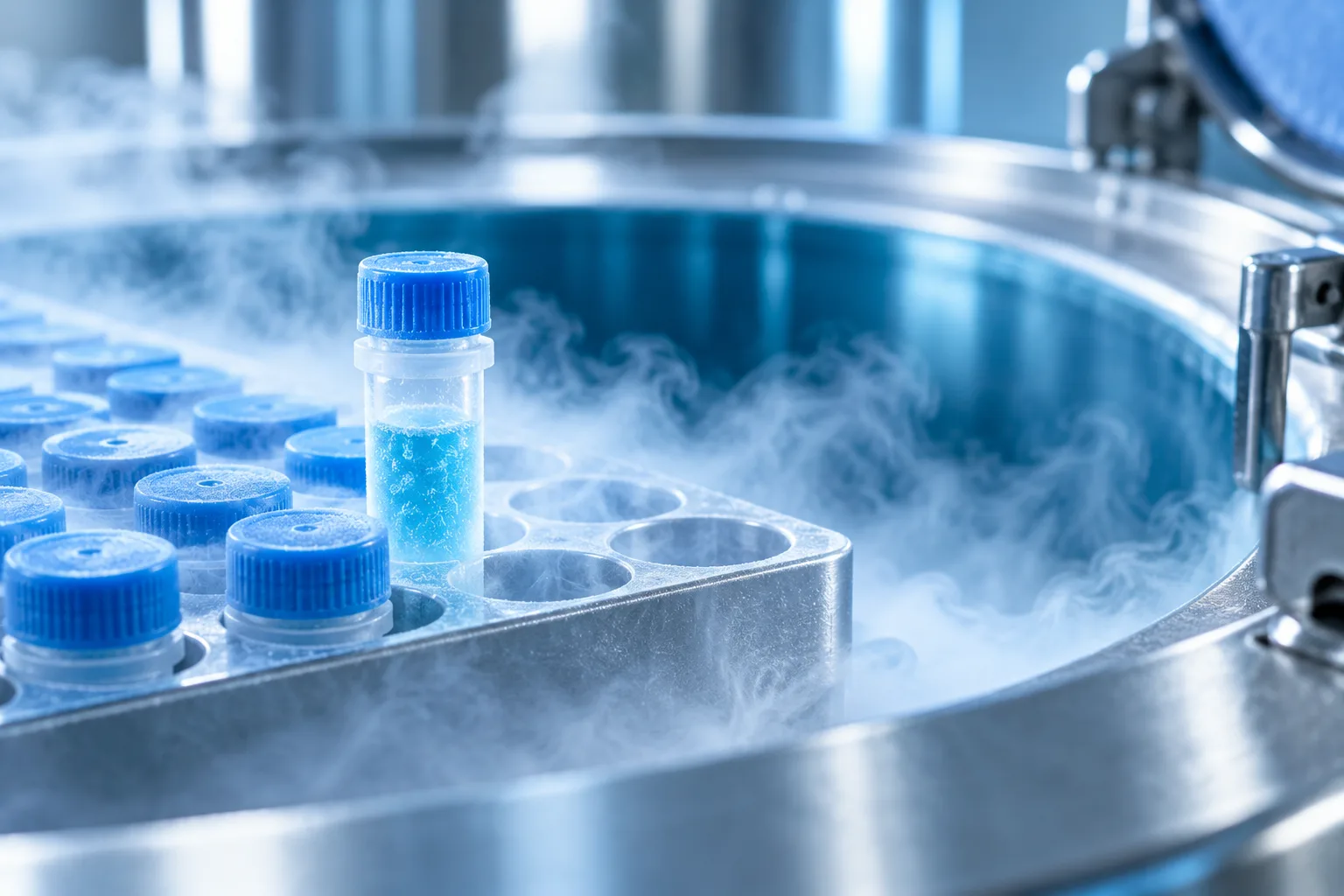
Organ Transplantation
Cold storage and machine perfusion support transplantation. Researchers are exploring longer preservation through supercooling, vitrification, and improved warming.
Related concepts: Transport, temperature uniformity, function
Explore the related lessonFertility & Reproductive Medicine
Preserving sperm, oocytes, and embryos allows storage for potential later reproductive use. The technique and outcome depend on the biological material.
Related concepts: Vitrification, osmotic stress, viability
Explore the related lessonStem Cells & Regenerative Medicine
Banking stem cells helps coordinate collection, research, and treatment. Preserving differentiation potential and biological activity matters alongside survival.
Related concepts: Recovery, cell identity, function
Explore the related lessonCancer & Cell Therapy
Cryopreservation supports the storage and transport of some therapeutic immune-cell products. Each product needs evidence of retained biological activity.
Related concepts: Functional assays, CPA exposure
Explore the related lessonBlood & Immune Cell Banking
Selected blood components and immune-cell populations can be banked using methods suited to their biology. Not every component is stored in the same way.
Related concepts: Cell-specific methods, recovery
Explore the related lessonTissue Engineering
Engineered tissues need their cells, three-dimensional organization, and matrix to remain useful after preservation.
Related concepts: CPA penetration, tissue structure
Explore the related lessonConservation Biology
Cryobanks preserve biological material from animal species. These collections support research and may contribute to future conservation approaches.
Related concepts: Cell banking, genetic resources
Explore the related lessonSpace Medicine
Metabolic suppression is being considered for future long-duration missions. Human hibernation or reversible whole-body cryopreservation for spaceflight is not established.
Related concepts: Metabolic suppression, evidence limits
Explore the related lessonSources & context
- Han et al. (2023). Vitrification and nanowarming enable long-term organ cryopreservation and life-sustaining kidney transplantation in a rat model. Nature Communications. ↗Animal study; this finding does not establish clinical human organ banking.
- de Vries et al. (2019). Supercooling extends preservation time of human livers. Nature Biotechnology. ↗Ex vivo human liver research; supercooling maintains a liquid state.
- Human Fertilisation and Embryology Authority — Egg freezing ↗
- ATCC — Animal Cell Culture Guide, cryopreservation guidance ↗Technical guidance for cell cultures; individual cell types require validated conditions.
Some application summaries introduce research questions. Their related lessons identify any additional citations still needed.