Explore the science
of life at
low temperatures.
Discover how scientists preserve cells, tissues, and organs—and why controlling ice could transform medicine.
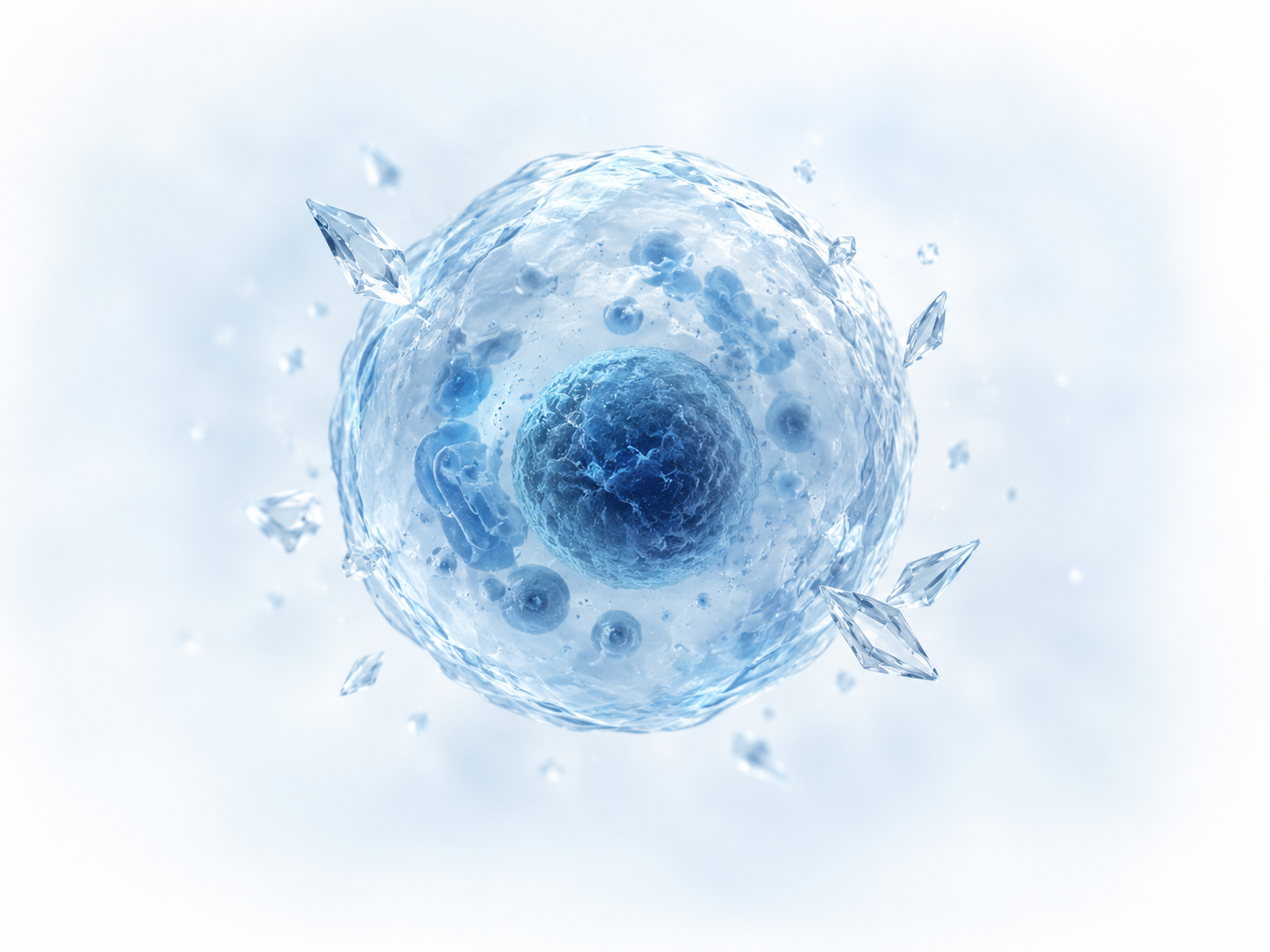
What happens to life
when we turn down
the temperature?
Cryobiology explores how living systems respond to low temperatures. It brings together biology, chemistry, and physics to understand the cold—and how we might use it to preserve what matters.
The challenge goes beyond cooling a cell. It is bringing it back with its function intact.
Meet cryobiologyBuild your understanding.
Begin with the fundamentals. Follow the questions that interest you.
Lesson 1: What Is Cryobiology?
Meet the science of life at low temperatures.
Lesson 2: What Happens to Cells at Low Temperatures?
Follow a cell as molecular movement slows.
Lesson 3: Why Ice Damages Cells
Ice changes more than the shape of water.
Lesson 4: Ice Nucleation and Crystal Growth
Understand how the first ice crystal begins.
Two ways to
meet the cold.
Ice crystals or a glass-like solid? Explore how cooling and cryoprotectants can change the way a solution solidifies.
Explore Freeze vs. VitrifySchematic particle arrangements
Small-scale science.
Real-world possibilities.
More time. More possibilities.
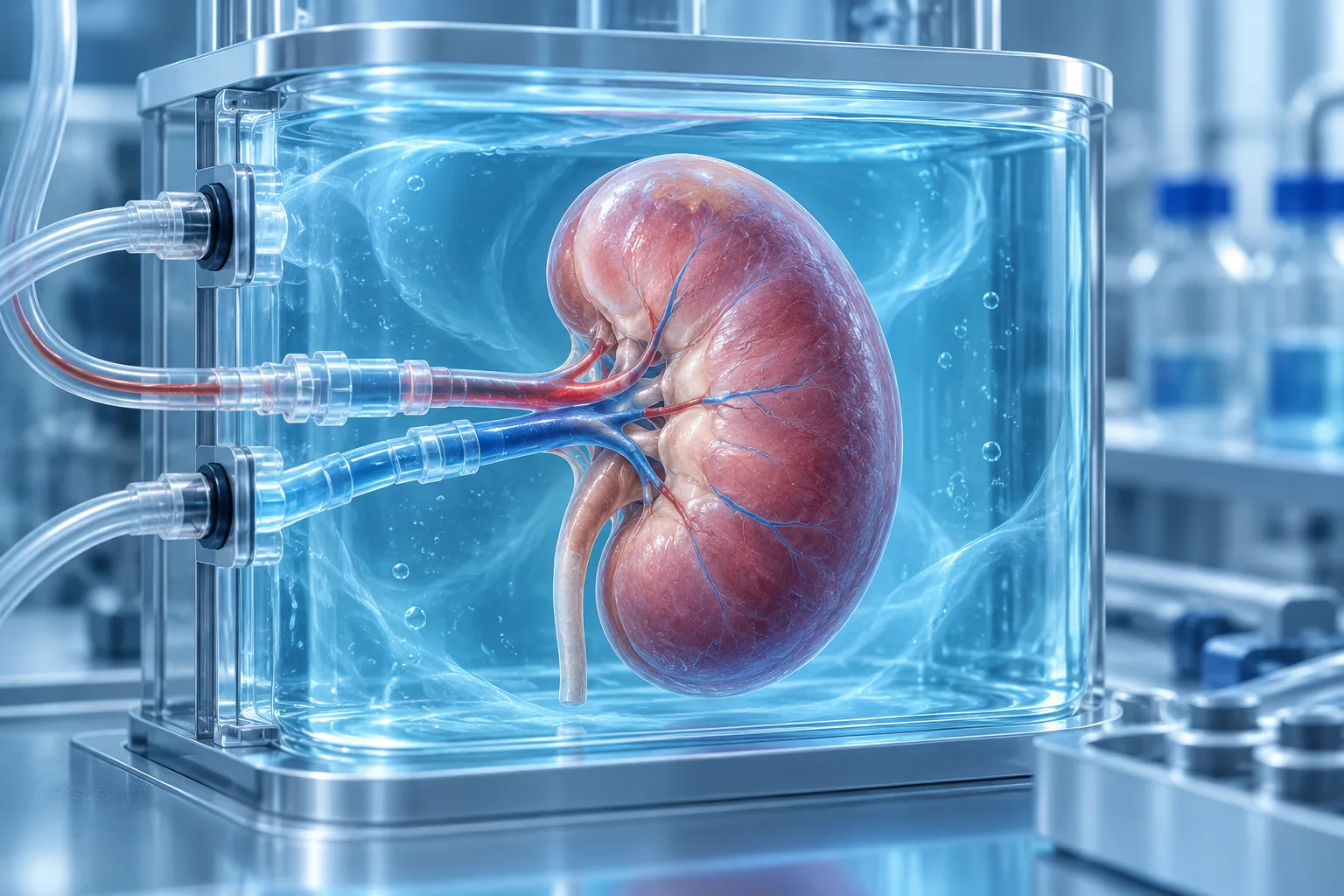
Could we build
an organ bank?
Vitrification and nanowarming are opening new research questions about long-term organ preservation. Start with the evidence from a rat-kidney study.
Read the spotlightCan you save the cell?
Choose a sample, protective agent, and cooling approach. Explore the scientific tradeoffs in a conceptual simulation.
Making cryobiology accessible
to the next generation of students.
An independent educational project by Tahir Laeeq.